Main Page › Forums › L-5 Maintenance Forum › Tail wheel shimmy and geometry
- This topic has 13 replies, 4 voices, and was last updated 4 years, 5 months ago by
 John Griffin.
-
AuthorPosts
-
-
2022-03-20 at 11:11 am #5221
I think I have the wersja tire. Early on I noticed if I ran no sag pressure it would shimmy in 3 point landings, but if I let some pressure out and allowed some sag it would not shimmy. I now notice that on payment it will shimmy if I keep the stick back but if I unload the tail the shimmy stops. Sitting in the hangar, the geometry looks good for the tail wheel shaft, but if I press down on the tail it goes in trail which leads to shimmy. Having said all that, my question is, could it be a weak spring on the shock or low fluid or both? Thanks, John
-
2022-03-20 at 2:18 pm #5222
Hi John, Assuming you have an original L-5 Lake State tail gear assy, the problem will not be strut or spring related. It will be in the tail gear itself. The lock pin can get loose ( side to side) because the groove in which the lock pin rides will wear out. It gets worn wider which allows more rotational slop in the arm. Also the vertical pivot shaft can have a wobble or side play which also screws with the ability to prevent shimmy problems.
I am trying to load a video which will illustrate the issue some. (unable).
98% of L-5 shimmy issues in the tail gear assy. Lift the tail gear off the ground and grab the tire. Wiggle it fore and aft and side to side (not swiveling it , but rather side load it toward the wing tips). There should be little to no movement between the gear arm and the upper gear housing. Upper housing is where the tail wheel arm spindle swivels while taxiing.
ST
-
2022-03-20 at 2:27 pm #5223
Whoops for got about tires. Smooth contour or rounded tail tires will shimmy before a treaded or a flat tread tire. The smooth tread contour is just prone to begin slightly sooner than the others, but the tail gear assy. wear which allows the shimmy to start and continue, will eventually wear out more and no tire shape is safe:). Sadly, with L-5 tail tire choices, all that is available is the Smooth Contour (most sensitive to shimmy type).
ST
-
2022-03-20 at 5:20 pm #5225
If you have the Stomil “Wersja” tire, it will say Stomil on the sidewall and it is a smooth contour type.
Shimmy can also be attributed to the “caster angle”, which is the angle of the pivot post measured from the vertical. The image below is copied from an article I wrote on tailwheel problems in issue No.17 of the L-5 Newsletter. I encourage you to look at all the old newsletters and at least take note of the maintenance articles and maintenance tips sometimes found in the “Letters” section.
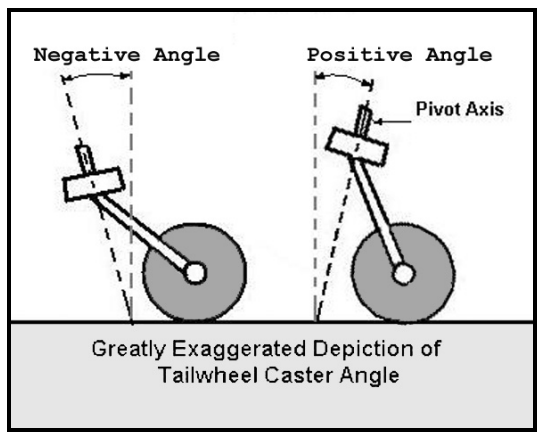
Anyway, a negative caster angle will tend to increase shimmy, and a worn assembly or unbalanced tire will make the shimmy much worse. A positive angle will reduce or eliminate shimmy and can improve the behavior of a worn tailwheel assy. If the coil-over spring on the tail shock assembly loses full temper and becomes a bit soft, it may compress too far, especially with a high aerodynamic load on the elevator. This puts the pivot post at a negative (bad) angle, and it doesn’t take much to cause shimmy. A badly worn pivot-post bearing, particularly along the fore-aft axis, can also create a neutral or negative caster angle. In either case, relaxing stick back-pressure a bit to reduce aerodynamic load can help, especially at higher speeds.
Making a new swivel bearing, re-tempering the coil spring to bring it within tolerance, having a new spring made (which a few people have done), or finding a replacement may be necessary in some cases. Adding a pair of custom-made nylon or neoprene shims can help too. This will also quiet the banging as the strut fully extends on takeoff and collapses on landing.
Whatever the cause of the problem, the goal is to have the pivot post angle at about 1.5 to 2.0 degrees positive. That may seem like an inconsequential amount but the difference is dramatic between a caster angle that is neutral or negative.
-
This reply was modified 4 years, 7 months ago by
admin.
-
This reply was modified 4 years, 7 months ago by
-
2022-03-21 at 11:05 am #5228
Here are common L-5 tail wear areas which lead to shimmy.
Worn Lock pin groove sides– The lock pin has shifted side to side widening the gap and allowing side movement.
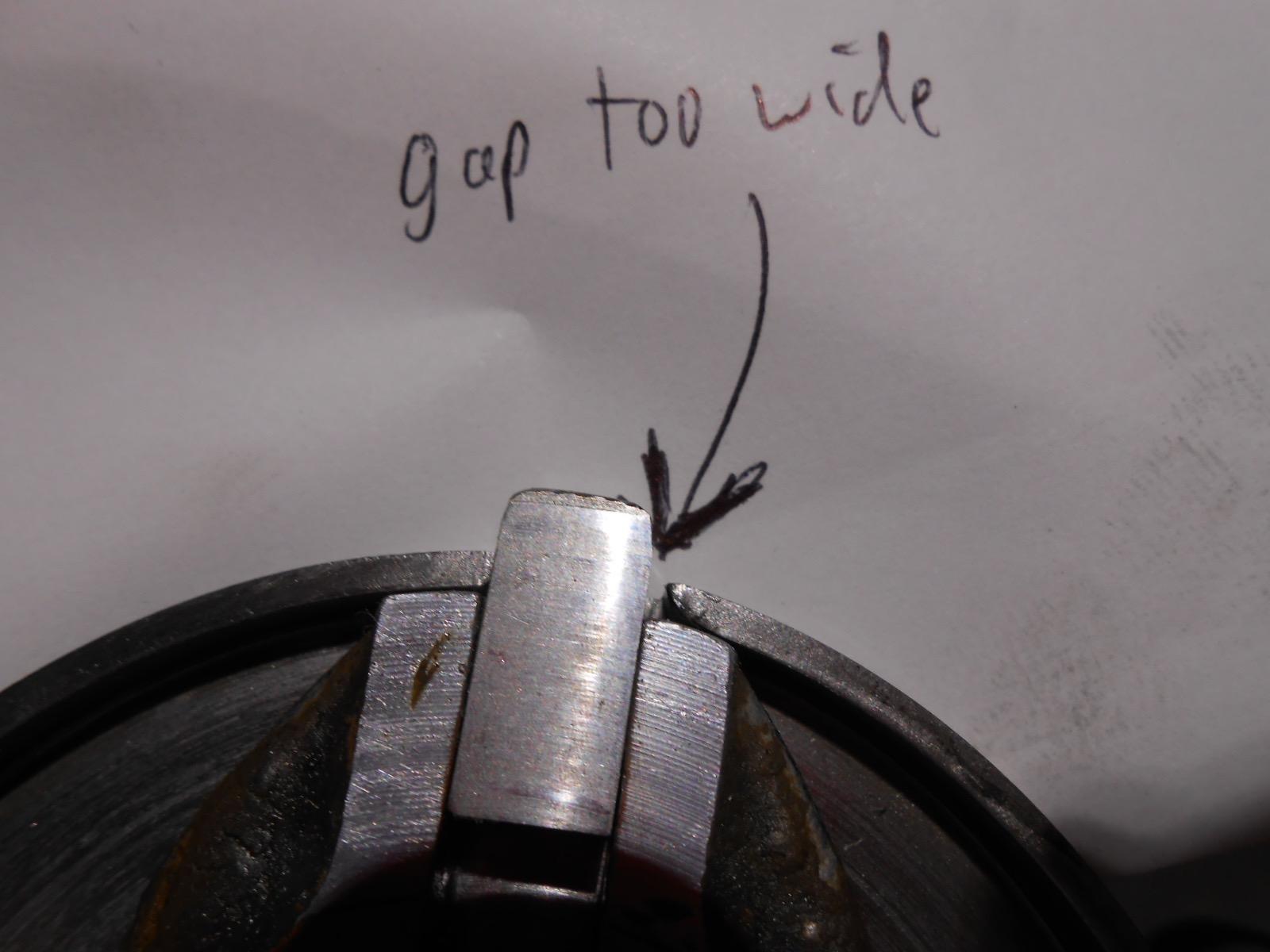
Lock pin groove has rounded sides ( from normal lock and unlocking). The normally squared off groove sides and weaker and will side wear quickly.
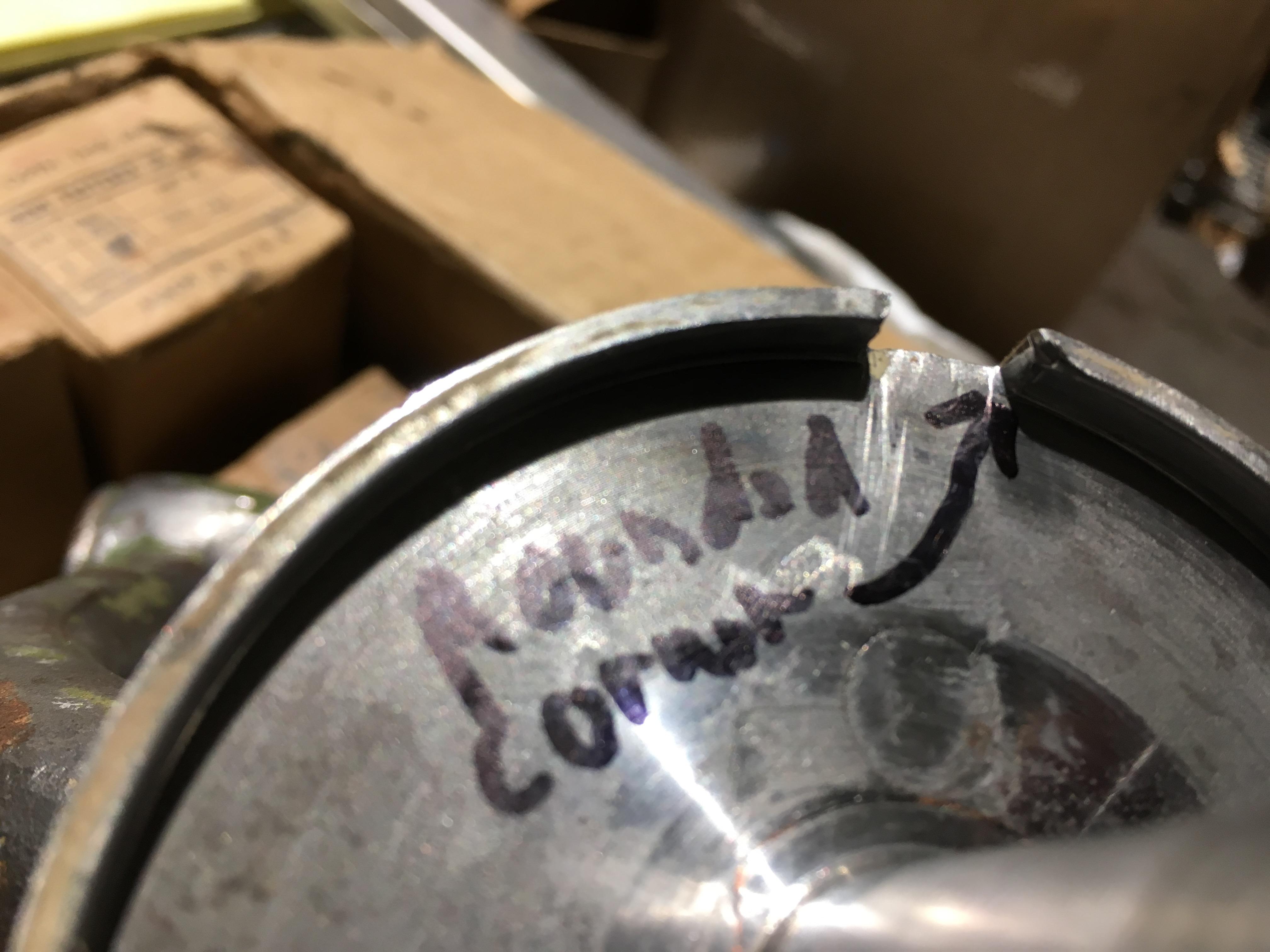
Top edges ( in this photo) show rounded off edges of lock pin from use. ( I just rotated the pin to use squared off section of the pin.
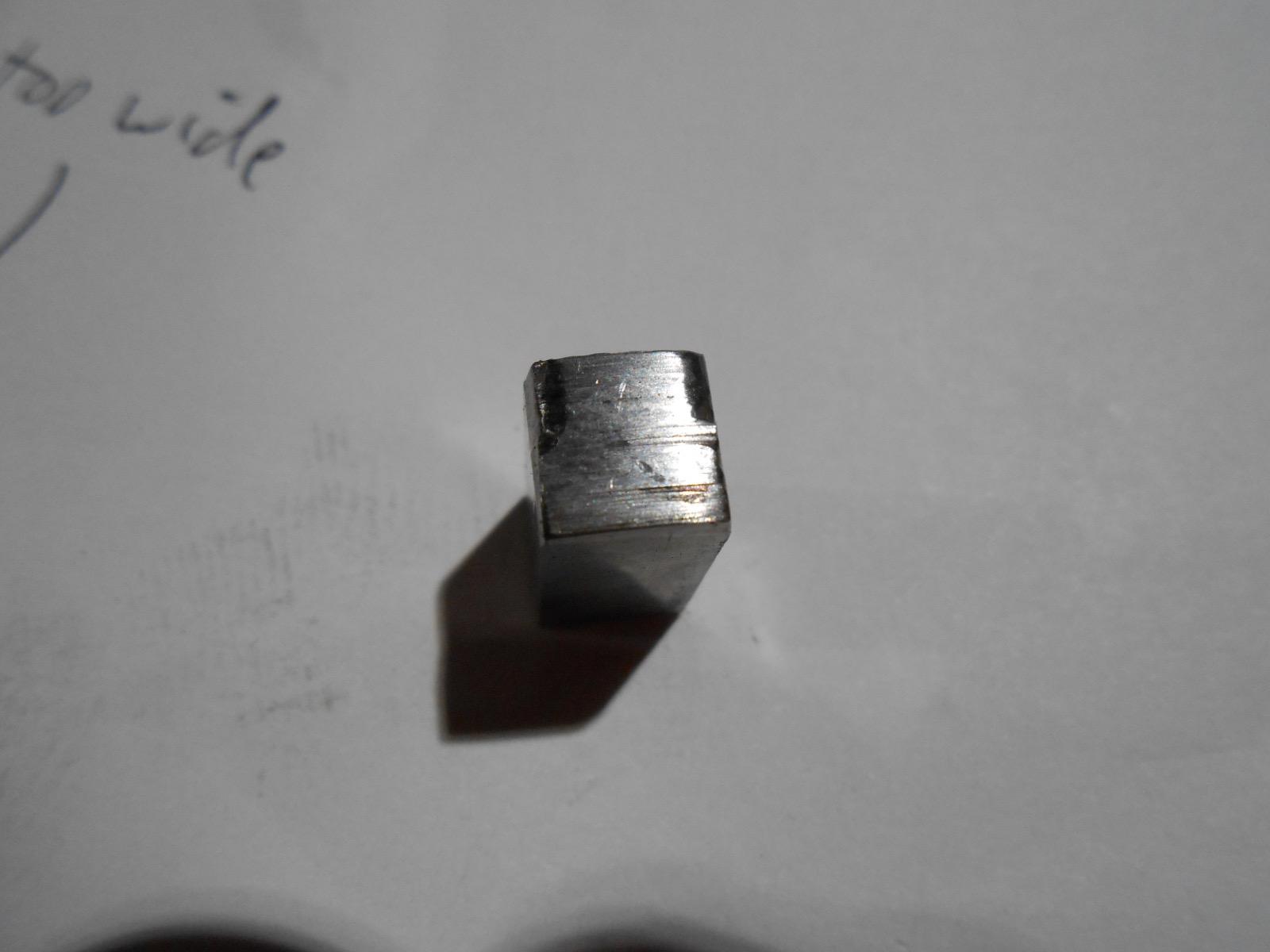
What I cannot illustrate is the wear and subsquent slop in the vertical shaft. Those wear items will set up shimmy conditions. Most L-5 tail gear shimmy issues stem from slop in the tail gear assy! ST
-
2022-03-27 at 7:39 pm #5232
Sam and Jim,
Thanks for the info. I’ve been unable to get much hangartime in the last week. I do have the wersja smooth tire. My geometry goes to the dark side when the tail is pushed down so I know that is an issue. I hope to jack up and check the play in the assembly this week.
-
2022-03-28 at 3:08 pm #5240
Great info. Thanks Sam and Jim.
Bill
-
2022-04-02 at 8:03 am #5262
Finally got hangartime. I jacked the tail up and played with the pivot point of the tailwheel and I have some play side to side and front to back. What are my options?
-
2022-04-02 at 8:25 am #5263
John,
Disassemble it and determine what is causing the “play”. It is not difficult, just take pictures so you know how it goes back together. Compare what you find to Sam’s pictures and those in the L-5 Newsletter article referred to above. A worn lock pin and/or worn locking slot in the Cam Shield are typical culprits for side-to-side play. Worn mounting slots in the steering arm, a worn pivot bearing, a worn bushing in the steering head, and even a worn pivot post (an extreme case) are all problems we’ve seen in the past. Some repairs are possible and some are not. Parts are non-existent except those scavenged from other Lakes States tailwheel assemblies. Sam Taber is your best bet for repairs and he has fixed a lot of them. Otherwise, your option is to replace it with another one in better condition (if you can find one) or do a Scott conversion which is expensive and not at all straightforward. Like many other components, there are no STC’d tailwheels for the L-5.
JG
-
2022-04-02 at 11:26 am #5265
Hi John,
Can you take a video of the movement and send it to me on cell phone? The hard part is to hold a camera still and wiggle a tail gear. It is like rubbing your stomach and patting your head at the same time Like we did as kids:). 262-215 -5882. is my cell.
Without seeing it yet. L&R plus Fore and aft movement is at least a worn Bronze bushing. My old fix was to have the machinist , true up the shaft OD and upper housing ID , then make a custom inner bushing to remove that play. The new bushing has a larger bearing surface and with proper greasing it will last longer than the stock bushing by about 50-75% .
I had gotten this rebuild system down pretty well on mine and I had 3 tail gear which I rotated through. 1 on the plane , 2 repaired, and 3 was worn and awaiting o/h. 🙂 I was getting 125-140 hrs between o/h to the first sign of shimmy. I would then change the gear out in the next 25 hours.
If you want to pull the tail gear and send it to me I will inspect it and get an idea of repair needed and cost ( from machinist). I am pinched for time, but I will try and get photos to help explain this tomorrow.
ST
-
2022-04-03 at 9:52 am #5267
This shows the original Lake State Tail gear bushing (right) and the larger style with a much larger bearing surface.
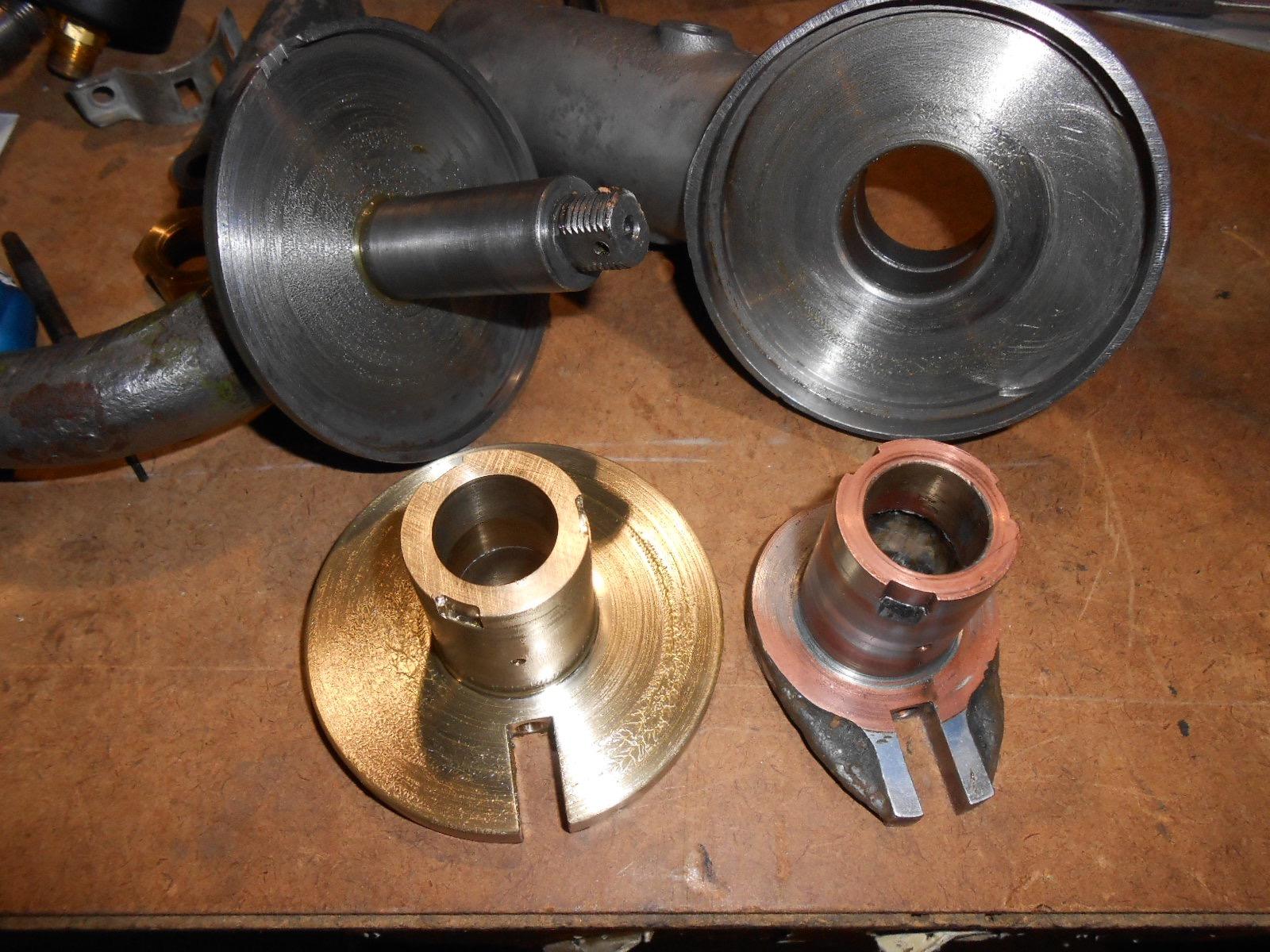
This type of wide bushing increased my interval between shimmy episodes.
My original tail gear assy was worn on the vertical pivot shaft. The shaft was worn thin at the ends and thicker into middle. This allowed it to rock against the inside diameter of the bushing. Also the bushing OD was worn along with the upper housing ID. This allowed rocking in all directions (except vertically). On my 4th landing the shimmying tail stopped mid shimmy and sent my nose 10 degrees to the right and fast! Fortunately I was going slower, maybe 25 MPH, and I was on a wide runway. That began my “Let Learn More About L-5 Tail gear” schooling:).
After flying my L-5 about 1000 hrs and working through the tail gear bushing repairs, lack of tires /tubes,etc, I finally elected to swap out Original for Scott 3200 lower end in 2018. I should have done that years ago! ST
-
This reply was modified 4 years, 6 months ago by
Sam Taber.
-
This reply was modified 4 years, 6 months ago by
-
2022-04-03 at 12:25 pm #5269
Sam,
I got some hangartime this afternoon and using tripod made a video of the slack from side to side and front to back. Doesn’t seem to be a way to post here but I sent it to your cell. It appears it is time for rebuild or replace. After being down for sump gasket year before and cylinder replacements this past year, I hate to be down again, but it’s far better than a trip thru the ditch. JG
-
This reply was modified 4 years, 6 months ago by John Griffin.
-
This reply was modified 4 years, 6 months ago by
-
2022-05-19 at 9:56 am #5553
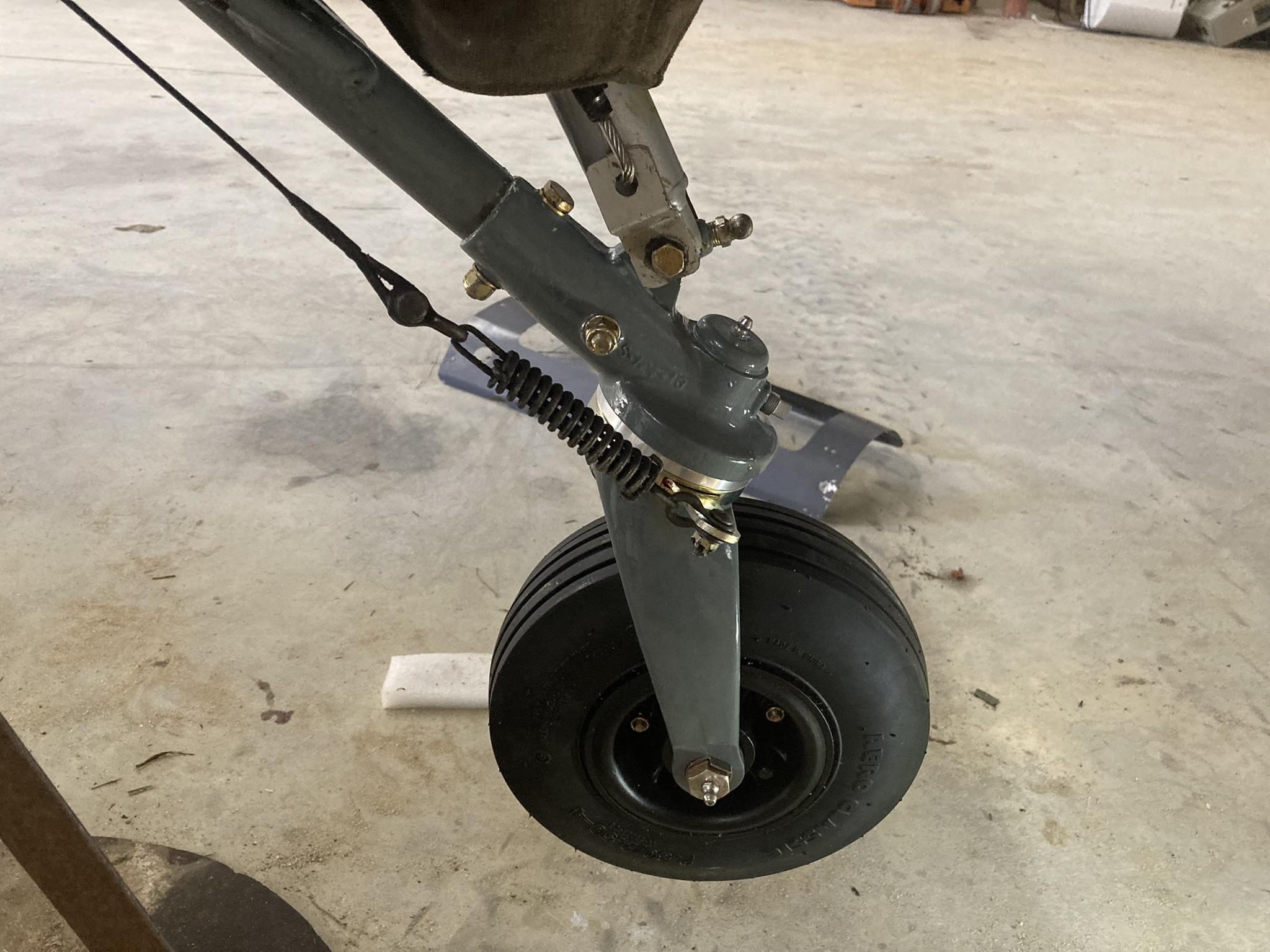
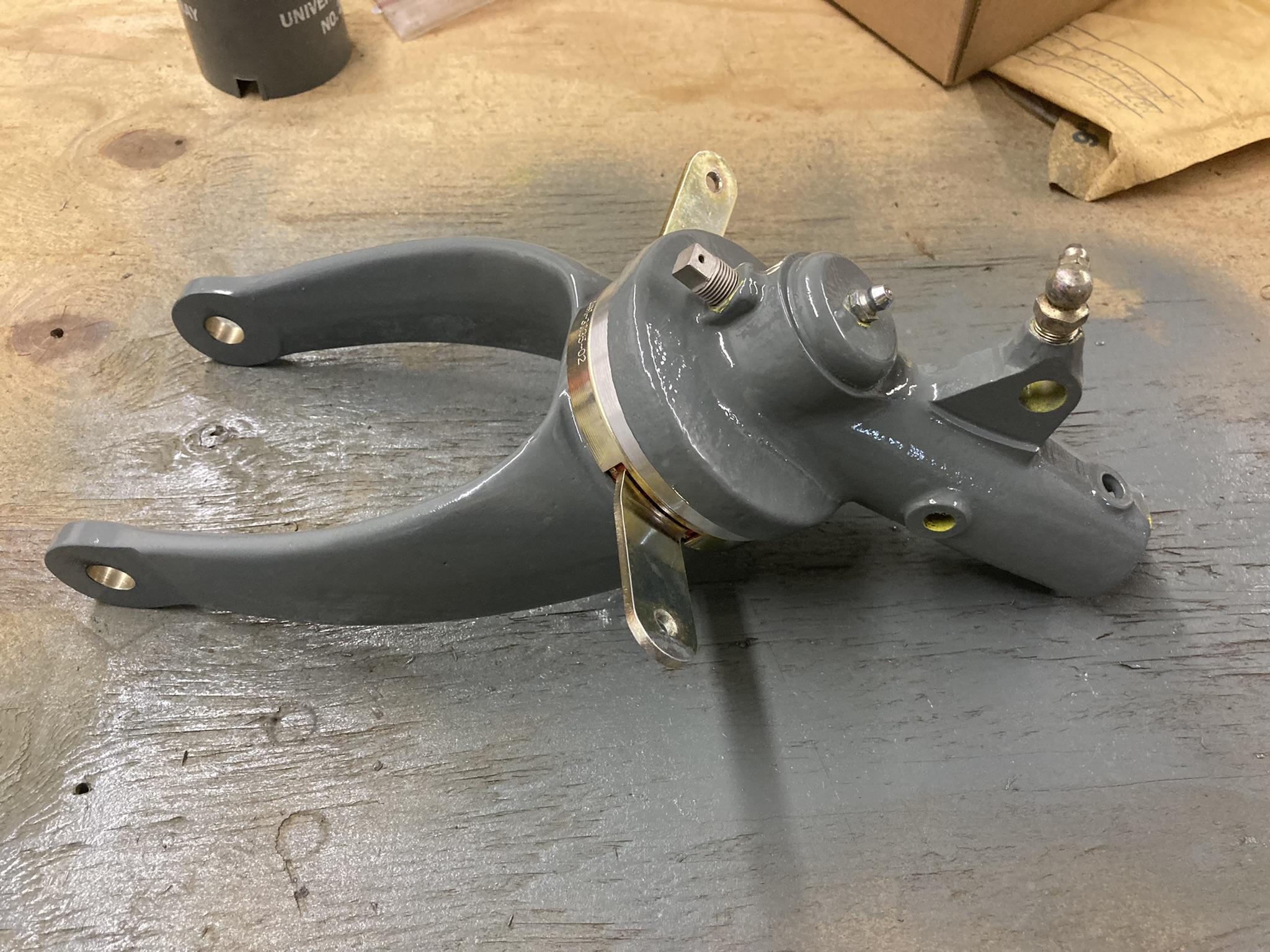
Shimmy is done. Opted to convert the Lake to Scott thanks to Sam Taber. It made a huge difference in ground handling. I would say it is now like a heavy Citabria. The rudder is stiffer than the Lake, but it goes where you point it without braking as much as the Lake. It’s a nice clean setup. I did have to adjust my homemade taildragger dragger for the larger wheel. If anyone needs the remains of my Lake, pay the shipping and it is yours.
-
2022-05-19 at 10:01 am #5554
-
-
AuthorPosts


- You must be logged in to reply to this topic.