
Forum Replies Created
-
AuthorPosts
-
Very cool!!!
ST
ohWWWW the is Nice!!! ST
Hi Matt, 5 7/16″ dia. 1 inch tall.
Sam
Great photo! Unheated hangar ( door open in background). I like the boot cowl paint:) Looks like plane was original green (of course) and still has that paint on section under the windshield. Then repainted silver (very light color area on sides) and black anti glare panel just visible at top section. But what has my attention is the newly sprayed Green on section of side boot cowl and along the edges of the side window and the wood rib around the gear leg. Also you can see the original outline of the wing (in green) at the root rib and the silver outlining it.
So they painted the OD green plane silver with the wings installed. But then? I wonder if they were using left over OD green as primer? ( adding chromate to colored paint? Grumman did this on F6F when they went from Tri-color to glossy blue paint schemes.)
Do you think this L-5 would have been finished in Silver or OD green when it was done?
Way to go Charles , Gerry and Lanny!! Sorry I could not hook up with you guys ( Charles and Gerry) at OSH. Shari and I had a screwed up schedule and missed a lot of things. I never even looked at your plane!!!!!!!! The day I wanted to, you had left already !!! So next year.! Bill G, too!
Sam Taber
Hi Guys, I used Harley ( I’m live 30 miles from MKE so I kind of have to use them:)exhaust gaskets . # 17048-98. They came in pairs. Mine have lasted 1000 hrs. the fit out of the box is too tight. You must work the packing ring ( squeeze with duck bill pliers is my method) until it is slightly larger and then it fit snugly against the stack tube wall.
The sealing surface between the bolting flange stub and the exhaust pipe is real crap for gap size and is variable due to the fit of the stubs to cyl, and mating stack. I reseal mine every 50 hrs with 106 high temp RTV. (The joint between stub and stack not the stub to cyl) .Works for about 35 hours:)
ST
Hi John, here is quick explanation of the relief valves and their operation.
A quick look into O-435 oil Relief valves-
Most engines have one high pressure relief valve which as the name implies, will prevent an over pressurization of the oil in the engine in case of cold weather starts. It will stop the oil pressure at a top limit and bleed off oil as needed to keep the pressure at or below the set limit. On our 0-435s it is known as the Auxiliary ( AUX) valve ( also know was High Press Relief valve) and it is mounted at the front end of the right engine case .
The AUX valve works using by a poppet valve held closed by a spring. The pressure oil is pushing against the valve head trying to open it, but the valve won’t open because the spring is holding the valve plunger closed against the valve seat. When the oil pressure pushes harder than the spring tension, the valve plunger will be pushed off the valve seat and oil can then flow past the plunger and return to the oil sump. Once enough oil has been release and the pressure drops below the spring tension, the valve plunger will close against the seat once again. This is standard in most piston engines. Depending on the “over “pressure and oil flow amount, this valve can be open a split second and then close again or it may stay off the seat for some time in order to regulate the High pressure limit. Normal operation will have the valve off the seat as long as needed to lower pressure. This pressure relief valve regulates the HIGH oil pressure on most engines.
The O-435 in our L-5s has two oil pressure valves instead of the normal single valve installed in most engines. In addition to the High pressure valve ,like the one listed above, O-435-1 and -11 have a low pressure valve as well. Oil is picked up out of the oil pan (sump) and drawn to the oil pump and then to the oil pressure screen.Pressure oil exiting the oil screen cavity, will travel down stream to the Main relief valve (also known as the low pressure relief valve ). This valve is located in the oil pan bottom ,Rt side. The function of this valve is to bleed off oil and send it to the oil cooler and then on to the oil sump. This valve does not control the high oil pressure relief. It controls the low end of the oil pressure range. This Low Press valve is designed to open at aprox 50-70 PSI. It only senses oil pressure ,not temperature.
On the O-435-1 the Minimum oil pressure in cruise is 50 PSI. Taxi back RPM or idle allows oil pressure as low as 25 PSI. Normal oil pressure runs between 65-80 PSI
This Main pressure valve is controlled by a spring #65703and is not adjustable. Note: I had tried to raise this pressure on my engine by installing a washer under the spring the way many older Lycoming engines do on their relief valve. ( who doesn’t’t like higher oil pressure/:) What happed was the increased spring tension did increase the pressure about 10 PSI but the relief valve now had a stronger action and it created a pressure spike. If this conditions happens it can cause a valve to “chatter” open /close very quickly. This chatter will often create a wiggle or pulse in the oil pressure gauge indication. The fix is remove the washers and just run the spring. If the problem still occurs the valve could be sticking or the spring is too long. Now, if someone has stretched the spring in the past , you will need to replace the spring with a proper one.
If this Main pressure valve was to become stuck closed or obstructed from in some form, this would create a high oil pressure situation and then the ‘Auxilary” or “High” pressure relief valve would open to keep from possibly blowing a gasket.
If the oil pressure is reading High at the cockpit gauge , this spring may be too strong.
Nice to have a engine that breathes easily:) ST
Hi John,’ I have yet to see a filter adapter which will attach to an O-435-1 case. In the past the ‘Universal “remote oil filter from Airwolf only used the remote filter mount pad ( where filter spins on). The O-435 has a unique oil screen/ temp probe mounting system. No other Lycomings are the same. That I am aware of.
The oil filter mount can go on the engine mount tubes or firewall and then you basically run the oil line from the oil pan ( Rt side , which goes to the oil cooler) and run it to the filter INLET. The Filter OUTLET then goes to the oil cooler. You are in essence ,putting the oil filter INLINE with oil cooler.
ST
Steve, Send your old ones in for rebuild. There is one style which cannot be repaired, but most can be. Look up an instrument shop and call them. ST
Forgot part 2. Gen overhaul is done by sending to an accessory shop for repair. There are several good shops. We use Aero Accessories Inc ( San Antonio) and S&T Aircraft Accessories ( New Braunfels ,TX). Both of these shops work with our “old” stuff:)
ST
Hi Steve,
Most of the L-5s have a 0-150 Amp range gauge as original equipment. This was the smallest range ammeter which was GFE ( Gov’t Furnished Equipment). Our Generators are only rated at 15 Amp output which is barely a needle width movement at full GEN output. So the original ammeter in the L-5 is almost a waist of space. That being said, the best way to check output is with a voltmeter. (I like the one listed above by John Griffin). What I do is install the volt meter on the A+ wire ( Armature + is the output wire of the Generator) either at the Generator or where the Generator A+ wire meets the voltage regulator. You should see the voltage build and achieve aprox 14 volts as you move the throttle. That is Gen output voltage. Then you can move the lead to the Battery side of the Regulator and run it up again. You should see the 12 volt (aprox) battery voltage rise to 14vt when the generator is connected to the main electric system as you run the engine up.
My method is ground based trouble shooting. Johns is a good in ground/ flight monitor system. My old GPS had a voltmeter function built in which I used all the time. New one does not. So I have no current way to monitor Gen output.
ST
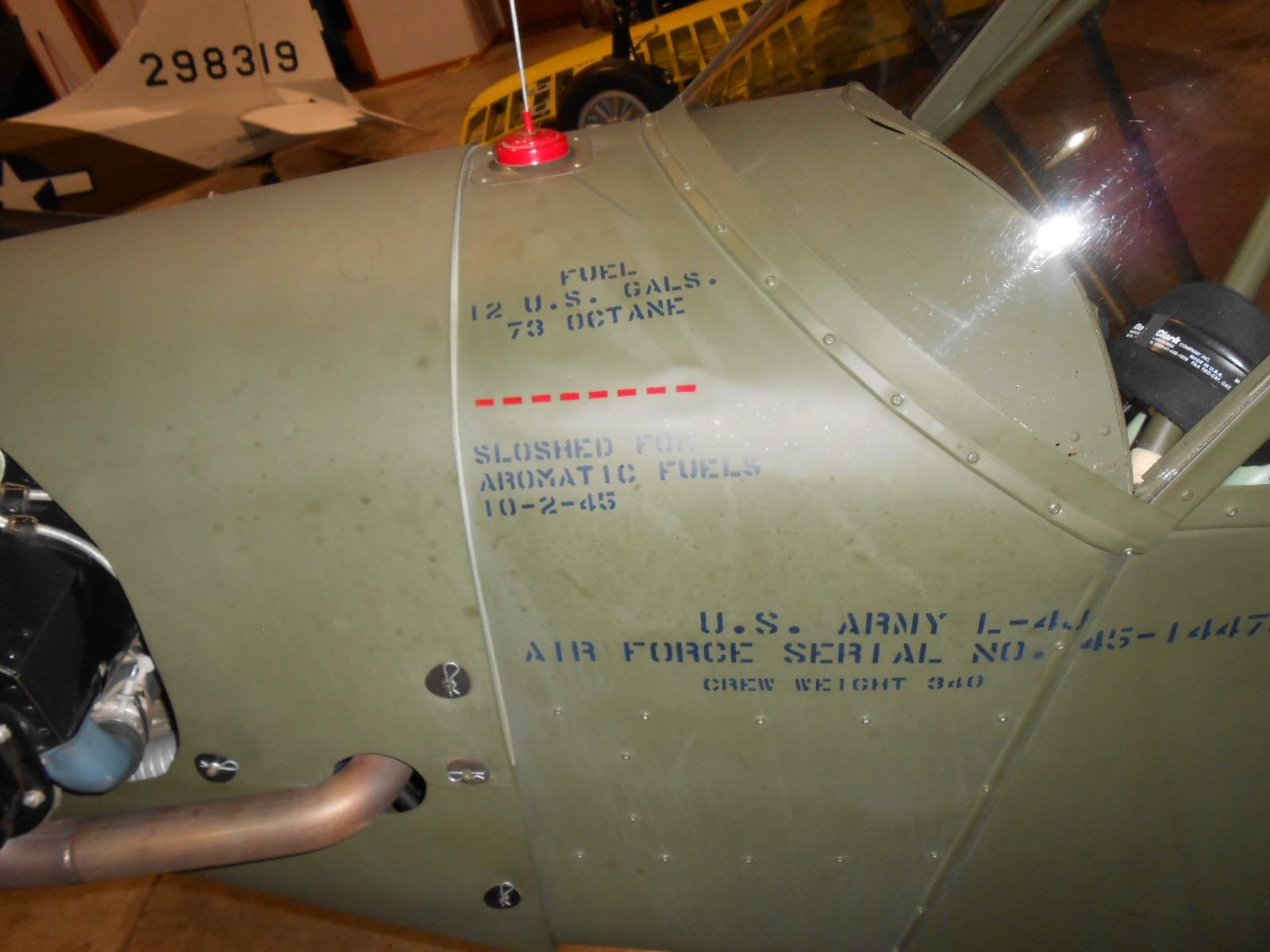
Hi Matt, I used the Diagraph and Marsh (brands of stencil cutters) stencil cutting machines for my plane. Photos attach ( I
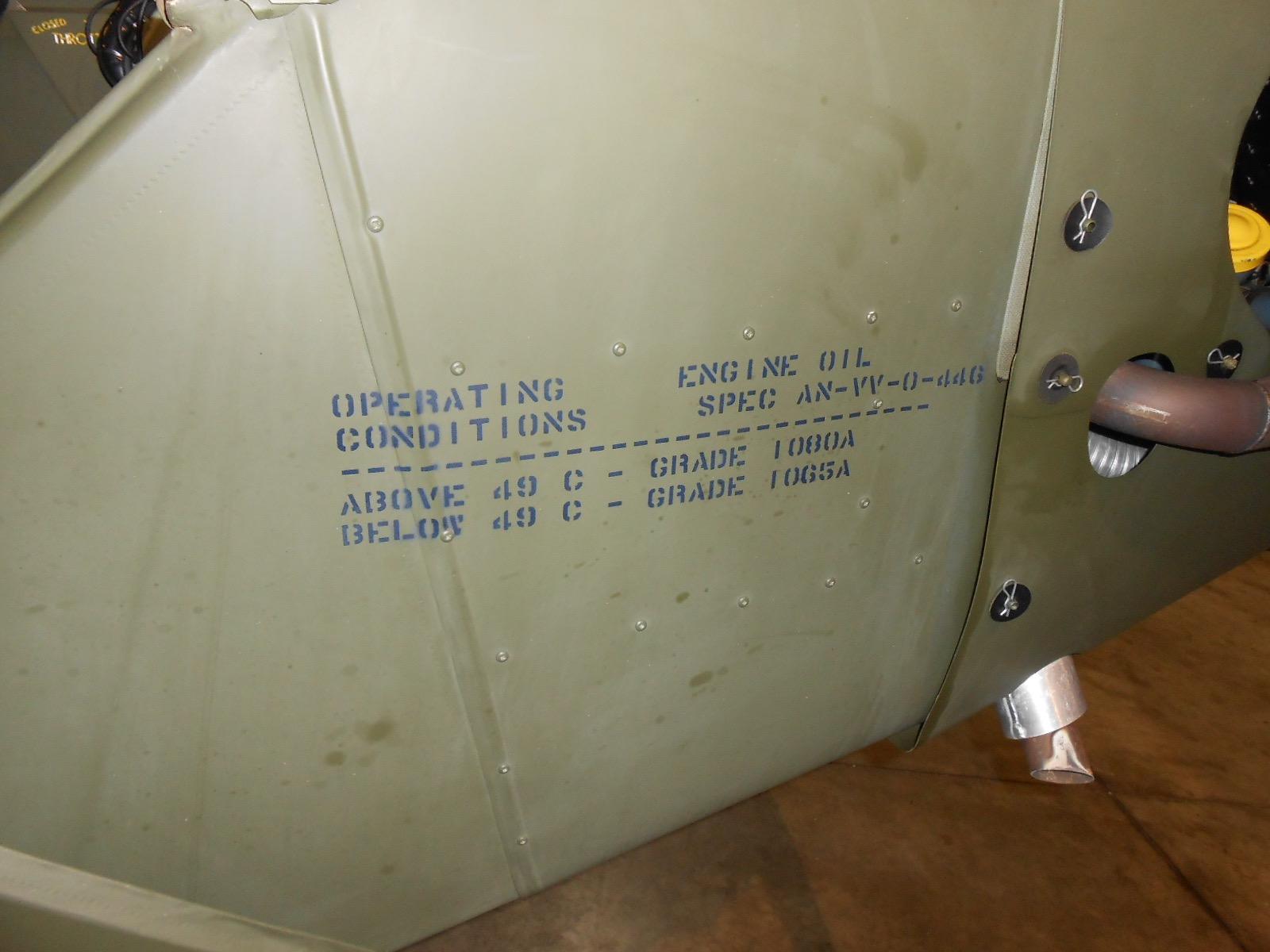 hope:)
That is awesome work Matt.That sure represents a lot of good , hard work. Looking really good!! ST
-
AuthorPosts
